

A small brown insect in your home can cause immediate anxiety. Your mind probably immediately thinks of the worst-case scenario, a blood-sucking parasite or some pest slowly eating your expensive rugs. Homeowners often confuse bedbugs with other pests, but they require entirely different treatment strategies. Knowing which intruder to call is critical to reclaiming your home. The behavior, physical appearance, and risks of both pests are reviewed. Understanding their biology enables you to recognize what is invading your space and protect your property and family.
Do I Have Bed Bug Bites or a Carpet Beetle Rash?
Most common confusion for homeowners is skin irritation. Others awake with red bumps and think they have bed bugs. But the real killer of the pest isn’t that redness itself – but where it comes from. Such true parasites have piercing-sucking mouthparts adapted to breaking human skin and drawing blood. They have firm red welts, usually localized or in a straight line. Even though the bed bugs inject both an anticoagulant as well as an anesthetic into the bite site, the goal seldom feels the bite when it happens, as well as the rigorous itchiness may cultivate hours or days after the bite.
How Can I Tell The Physical Difference Between A Bed Bug And A Carpet Beetle?
To the unaided eye, both insects are small, brownish oval specks. Yet close examination reveals two very different types of bodies and movements. A bed bug has a flat body that slides into the narrowest crevice. They are shaped like an apple seed and usually are mahogany or red-brown. Bed bugs are commonly misinformed that they fly. In fact they have vestigial wing pad and are restricted to crawling.
Where Are They Hiding in My Bedroom?
Your second-best diagnostic tool is where you find the pest. Pests select their “homes” depending on how close they must be to their food source. Bed bugs are “nestles”. Because they must have a human host to survive, they usually sleep within five to 8 feet of the sleeping individual. They may be discovered tucked into mattress piping and seams, inside cork headboard cracks, or even behind electric outlet covers next to the foundation.
Carpet beetles are “scavengers.” They need dark, quiet places with organic substances such as wool, silk or leather. You can find them under heavy furniture where dust and pet hair collect. They also live in dark corners of closets stacked with natural fiber clothing or along the edges of rolled carpeting. Like a bed bug, a carpet beetle wants to be near your body, not your belongings.
What Is Attracting These Pests to My Home?
The pests do not come into a home randomly. They enter for specific biological reasons or for accidental transport. Bed bugs are the ultimate insect hitchhikers. They don’t care how clean a house is, they simply want a warm-blooded host. Infestations begin when a bed bug arrives in luggage from a hotel stay, inside some used furniture, or in common laundries.
What Do Bed Bug Larvae vs. Carpet Beetle Larvae Look Like?
If you encounter an immature insect it is a major diagnostic aid for identification. Carpet beetle larvae are quite different and often mistaken for “woolly bears” because of their appearance. They are carrot-shaped with brown or tan undersides and have long, bristle hairs. In their active form they may be seen crawling across a floor or up a wall for food.
Lesser bed bug larvae are translucent versions of their parents. They’re not hairy and lack the long, carrot-like head of the carpet beetle. The nymphs seldom dare wander about in daylight hours as they camp in tight crevices and emerge only at night to feed. That fuzzy bug that you found moving across the carpet is a carpet bed bug larva.
Can Carpet Beetles Live in My Mattress?
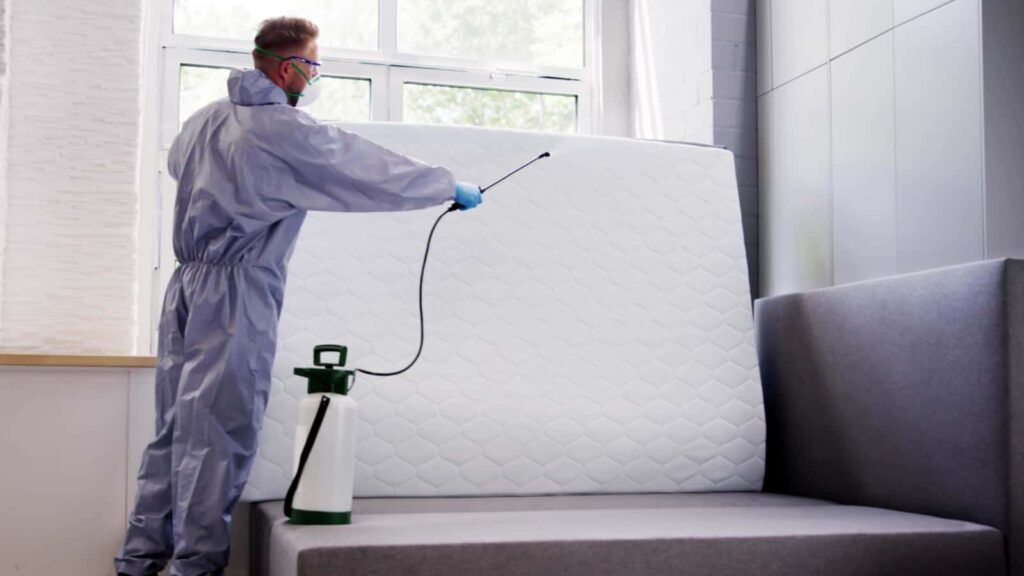
Some homeowners ask if carpet beetles infest a mattress. It’s possible, although not nearly as common as bed bug infestations are. Natural fibers attract carpet beetles. They are therefore only found in a mattress in the case where the bedding or the mattress contains wool, silk or down feathers: If your bed is modern synthetic material, the carpet beetle has no business being there. Bed bugs live in mattresses however, because the mattress allows easy access to the human hosts. Those insects in a synthetic mattress are almost certainly bed bugs.
What Are the Immediate Steps to Take After Finding a Bug?
The best advice if you find a bug is to just stay calm and avoid throwing your furniture away. Bring the sample first to an identification professional in a clear tape or glass jar. Next take a macro or close-up photo with a smartphone. Pass your photo along to an approved pest control firm such as Active Pest Control for proof of identification. Launder all bedding and clothing on high heat as temperatures over 120 degrees Fahrenheit kill the active stages of both pests.
Should I Choose a DIY Fix or Professional Treatment?
It all depends on the pest whether you decide on DIY or maybe professional therapy. When you discover only one carpet beetle, a Saturday spent heavy vacuuming and placing clothes away may repair the issue. If you find one bed bug, though, a DIY approach usually does not work. Bed bugs multiply horribly – one female can lay 500 eggs in a lifetime. There may be dozens more bugs under your nose before you even see one. Exterminators use commercial grade equipment and knowledge to rid the population of all living things, avoiding the cycle of re-infestation that plagues DIY attempts.
Conclusion: Reclaiming Your Home
Correct identification is key to pest control. With bed bugs, you have to work on sleeping areas and heat treatments. Protecting natural fibers and removing organic debris is your goal with carpet beetles.
It can be stressful going through a home invasion alone. Whether you found a suspect larva or wake up with strange rashes – a professional diagnosis can bring peace of mind. Working with professionals like Active Pest Control means getting a targeted solution that saves your home and your sleep.
Frequently Asked Questions (FAQs)
Yes. They compete because they feed on blood and fibers in separate niches. One home could accommodate both populations simultaneously.
Yes. Larvae might crawl on you and feed on the oils in hair or skin cells. Their hairs cause irritation similar to bed bug bites.
Bed bugs might survive months and sometimes a year without eating. Larvals of carpet beetle may live without food for weeks, but will migrate to new fibers.
Food/lint removed from cleanliness prevents carpet beetles from breeding. Bed bugs are attracted to hosts only; even the cleanest homes can be infected.
Rarely. Foggers push bed bugs deeper into walls and fail to penetrate rug fibers where carpet beetle larvae hide.